
ESG Patents: From Demonstrating Sustainable Management to Protecting It
In recent corporate management, ESG is no longer an optional image-building strategy. What truly matters is not the mere declaration that "we are doing ESG," but rather demonstrating exactly what technologies you have developed and how you have secured the legal rights to them. At Pine IP Firm, we view this intersection as the point where ESG patents become the core of corporate competitiveness.
In this context, an "ESG patent" refers to the strategy of protecting technological innovations linked to Environmental, Social, and Governance goals, and leveraging them for commercialization, investment, technology transfer, and dispute prevention. Simply put: ESG is the language of management, and patents are the tools that translate it into legal rights and business assets.
Why Patents Matter in the ESG Era
In the ESG sector, "verifiable evidence" carries far more weight than "good intentions." The Korea Institute of Intellectual Property has pointed out that a lack of objective information linking Sustainable Development Goals (SDGs) with actual technology can lead to "greenwashing" or "SDG-washing." Conversely, patent data provides an objective measure of the latest technological trends and industry flows, making it an invaluable tool for establishing strategy and measuring performance. Ultimately, patents serve as the most practical data to prove your ESG commitments.
Technologies ranging from carbon reduction facilities, energy-efficient processes, recycling, eco-friendly materials, and water treatment to safety enhancements, accessibility improvements, and industrial accident prevention systems can all be tied to a company’s ESG activities. By formalizing these technologies as patents, a company moves beyond the vague claim of "pursuing social value" and clearly proves its specific technological achievements and market differentiation.
A Higher Probability of Registration
Practically speaking, ESG patents tend to show a higher likelihood of registration.
Unlike fields dominated by massive corporate R&D, ESG innovations often focus on environmental and social benefits rather than purely technical utilities like extreme cost reduction or manufacturing optimization. Because of this, the competitive density is relatively lower. Compared to "deep tech" sectors like AI, semiconductors, or drones, ESG technologies often enjoy a higher practical registration rate.
The Time to Secure ESG Patents is Now
Domestic IP systems in South Korea are rapidly evolving to support the swift protection of ESG-related technologies.
In February 2025, the Korean Intellectual Property Office (KIPO) drastically expanded the scope of carbon-neutral green technologies eligible for priority examination. Previously centered around carbon capture, utilization, and storage (CCUS), it now includes hydrogen, ammonia, next-generation nuclear power, advanced mobility (EVs/hydrogen vehicles), and a broad spectrum of renewable energies (solar, wind, hydro, geothermal, hydrothermal). Crucially, KIPO also removed the mandatory prior art search requirement for priority examination applications, significantly lowering the burden on applicants.
If you have technology connected to ESG, the current landscape dictates that "preempting now" is far more important than "filing later." From a practical standpoint, this is a massive shift. Companies holding ESG technologies can secure their rights faster, presenting a much clearer intellectual property position during market entry, investment pitches, supply negotiations, or joint research discussions.
Strategy Must Precede Filing
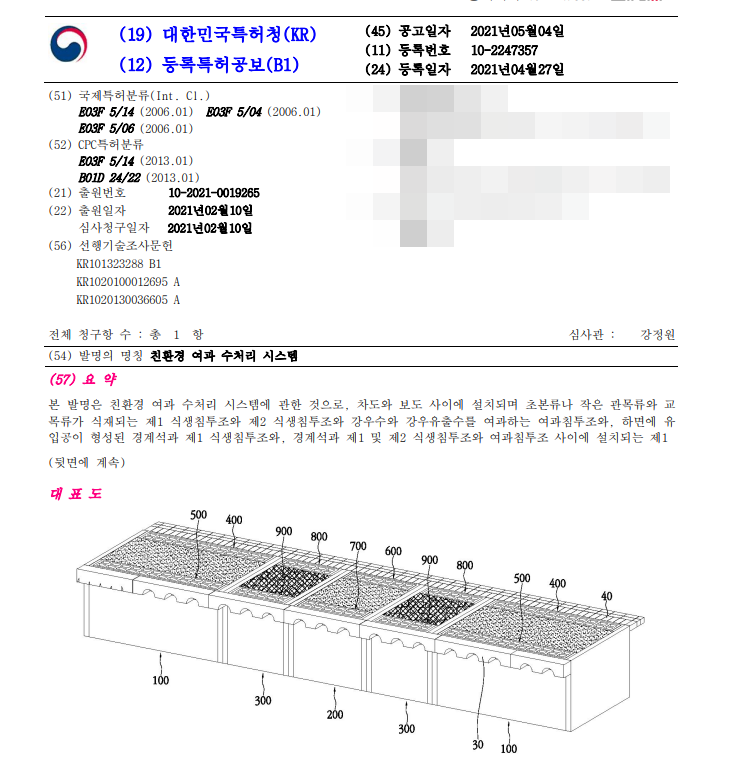
Many companies possess valuable ESG technologies but miss out on patent strategies because their R&D and IP efforts operate in silos. ESG patents require a far more strategic approach than standard patents:
- Structure the ESG Connection: You must clearly define how your technology links to ESG. For an energy-saving technology, the patenting focus will shift depending on whether it is a simple efficiency improvement, a direct carbon emission reduction, or a resource circulation method.
- Translate Business Language into Rights Language: Saying "this is an eco-friendly process" is insufficient. The invention must be articulated in a way that makes infringement detectable—such as specific process conditions, control methods, material compositions, sensor integration structures, or data processing logic.
- Design a Global Strategy: Domestic filings are rarely enough. ESG technologies frequently intersect with global supply chains, exports, licensing, and international joint development.
Amplify Persuasion with IP Management Certification
A strong ESG patent strategy doesn't end with one or two filings. Building an internal IP management system—connecting invention discovery, training, dispute prevention, and technology utilization—is what creates genuine competitiveness.
KIPO’s Intellectual Property Management Certification is designed to encourage this exact systemic operation for SMEs. Valid for four years, it evaluates an organization's IP dedicated staff, employee invention compensation programs, domestic/international filing records, and dispute prevention measures.
The practical benefits are undeniable: certified companies receive benefits like priority examination for patents, utility models, and designs, a 70% reduction in annual registration fees (for years 4-9), and bonus points in various government support programs. For a company preaching ESG, building a reliable system to manage your patented assets is just as vital as the patents themselves.
Considering the Global Connection
ESG technologies do not operate solely within domestic borders. Platforms like WIPO GREEN—established in 2013—actively connect providers of eco-friendly technologies with global seekers, supporting licensing, commercialization, and technology diffusion through its database and network.
An ESG patent is not just a certificate; it is the starting point for global technology transactions. Therefore, when preparing an ESG patent, you must look beyond "should we file or not?" and ask: Is this a future licensing asset? A joint development tool? A defensive patent for overseas expansion? A core talking point for attracting foreign investment?
The Core of ESG Patents
At Pine IP Firm, we view the core of ESG patents through three principles:
- First, ESG must be a protectable technology, not just promotional copy.
- Second, Designing the scope of the patent to connect with actual business operations is more important than the registration itself.
- Third, Domestic system advantages and overseas expansion potential must be viewed comprehensively.
Because the ESG sector experiences rapid technological shifts and policy changes, the quality of the specification and the design of the claims at the time of filing are critical. A patent is only useful in the real business world if it is designed from day one with competitor design-around strategies, examination responses, divisional applications, and overseas expansion in mind.
What You Need Now is a 'Good Right', Not Just a 'Good Tech'
Even if a company engages in meaningful ESG activities for years, without formalized legal rights, those innovations can be easily imitated by the market. Conversely, properly patented technology elevates ESG from a brand image to investment persuasion, transaction stability, technology transfer viability, and robust dispute readiness.
At Pine IP Firm, we provide customized support tailored to your business—from discovering ESG-related technologies and reviewing prior art, to patent filing, priority examination strategy, portfolio design, and international IP strategies. If you want to turn your ESG management into actual competitive power, it is time to move beyond explaining your technology and step into protecting it.