
Copyright, Patents and Trademarks Through a Webtoon Translation Patent
NAVER WEBTOON’s US Patent 10,733,388 concerns a system that lets multiple users translate comics from one language into another. Based on Korean applications filed in November 2014, the US application was filed in November 2015 and granted in August 2020.
This single patent illustrates how a content company’s rights divide. The comic is the author’s copyrighted work; the translation system is the subject of a patent; and service and work names may be protected as trademarks. Contracts and terms of use determine who may translate the work and who may use the translations users submit.
Storing text and images separately enables translation without image editing
The specification explains that online comics traditionally stored both artwork and text as images. Translation therefore required erasing text with image-editing software and inserting translated dialogue into the images. In this invention, text and image data are stored in separate layers when the original is registered.
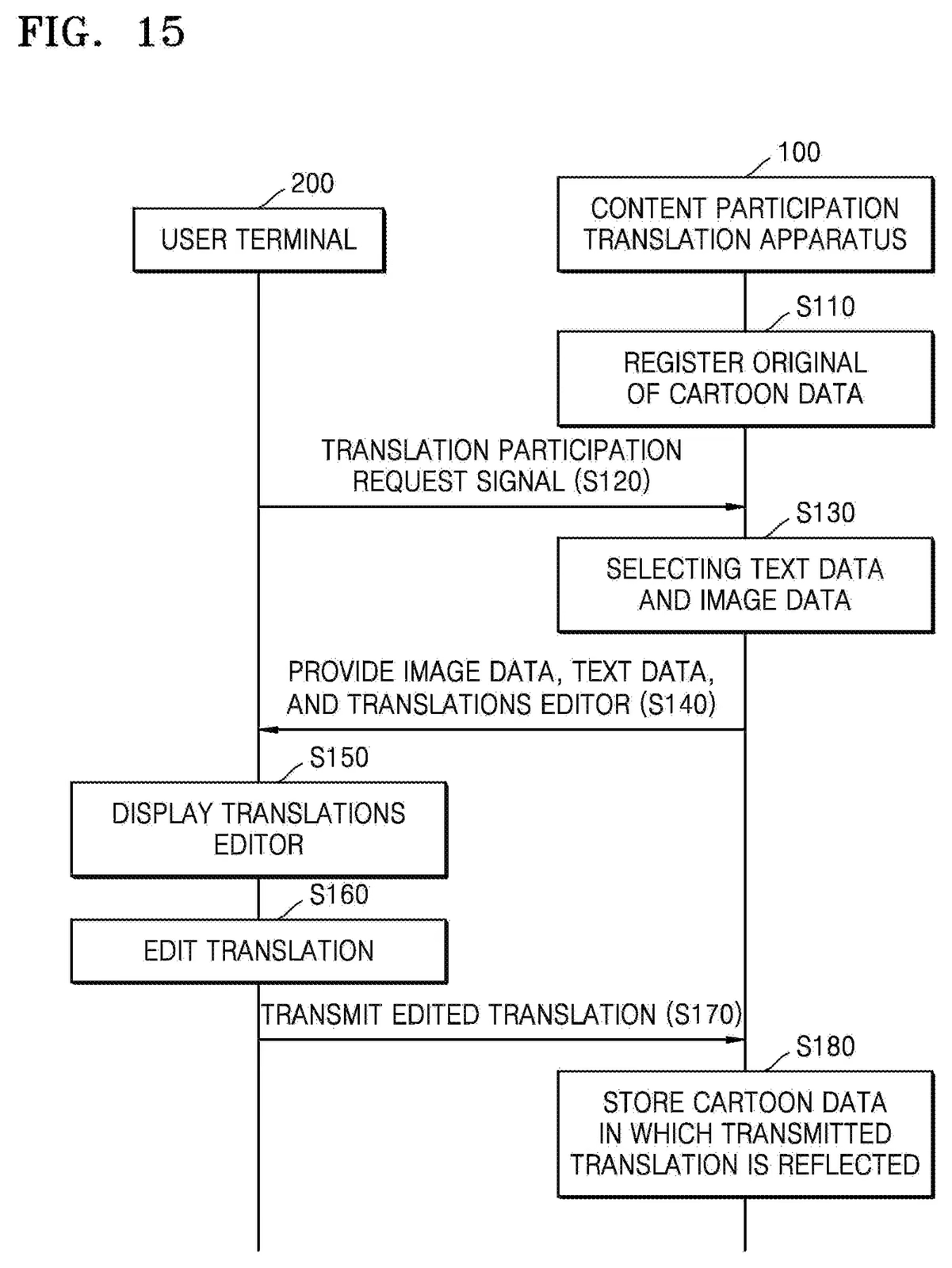
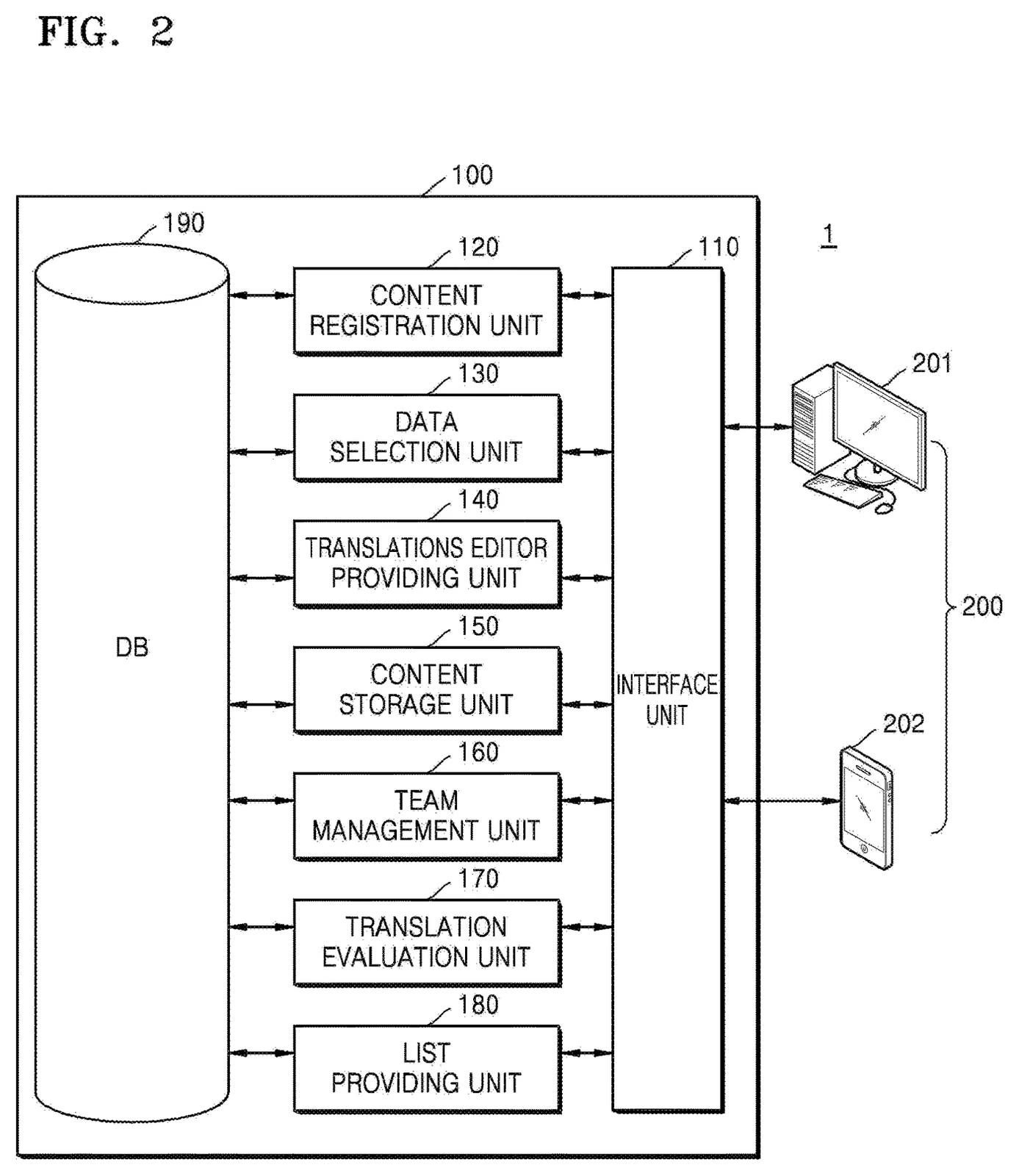
Claim 1 is specific. A content registration unit registers the creator’s original in a database. A data selection unit selects text and image data separately, without an image-editing or character-recognition program.
A translation-editor provision unit displays an editor on the user’s terminal. A content storage unit receives second-language text entered by the user and stores the translated content. The comic and dialogue input fields appear side by side; translated text is displayed where the original dialogue appeared.
Dependent claims add participant management. Claim 4 adds a team management unit for creating translation teams and managing membership and withdrawal. Claim 5 evaluates users using at least one of the number of translated sentences, site visits, views of others’ translations or followers.
The translated comic remains the author’s work
The claims do not cover the comic’s artwork, dialogue or story. These are the author’s copyrighted expression, and a translation is a derivative work based on it. Before offering the feature, a platform needs permission to translate and distribute translations, independently of its technical rights.
User-submitted translations also need clear treatment. Contracts or terms should identify ownership, the platform’s editing and usage rights, and what happens when the service ends. Otherwise disputes may follow. Even a company holding rights in the original may be unable to pursue translation, remakes or merchandising if its agreement omits those rights.
Copyright arises upon creation, so registration alone does not determine whether rights exist. Transactions and disputes turn on who created what and when, and which rights the company acquired. Keep versioned proposals, synopses, scripts, storyboards, audio, video and source code. Link emails, delivery confirmations, repository commits and revision instructions to the original files.
Assignment and licence clauses should specify the works and rights, exclusivity, territory, term and media. Check each intended secondary use, including screen adaptations, games, translation, remakes, merchandise, performances and AI training or processing. Also address delivery of source files, permitted modifications, attribution, credits and use after termination.
A famous character is not necessarily being used as a trademark
A work or character name used as a content title must be distinguished from use as an indicator of commercial origin. The TTAB’s May 2021 decision in In re Epic Games illustrates this distinction. Epic sought registration of its in-game llama design for downloadable video game software and online game services.
The Board examined the patch-notes webpage submitted as a specimen. The llama appeared repeatedly in different sizes, colours and crops. The Board considered that consumers looking for the webpage’s source would find it in the word FORTNITE at the upper left.
It therefore affirmed the refusal for game software because the design did not function as a trademark. The online game services portion remained at the stage awaiting evidence of use.

Even a well-known character may fail to register if it is not shown functioning as a source identifier for the goods or services. Registering only the company name leaves gaps for work, character and series names in licensing and merchandising. Conversely, broad filings without use plans increase cost and administration. Select actual and planned businesses—video, publishing, games, apps, performances, toys, clothing, food, education and retail—and prioritize them against disclosure and country launch schedules.
Patent visible technology; protect concealed information as secrets
Once a feature such as a translation editor appears on users’ screens, competitors can infer aspects of its structure. Decide whether to file before disclosure through an app launch, investor presentation, demo, press release, paper or exhibition. The US application leading to US 10,733,388 was likewise filed within one year of the Korean applications of November 2014.
Describe input data, processing steps, responsible components or actors, outputs and technical effects. This patent explains the sequence from original registration to storage of translated content. It also describes the benefit of immediately reflecting entered translations in the artwork, allowing users to choose wording that fits the image.
Recommendation weights, user metrics, revenue allocation methods, unreleased fictional settings and launch dates may be better protected as trade secrets when service use does not reveal them. Mark confidentiality levels, restrict access to those who need it and log downloads and external transfers. Revoke contractor and departing employee accounts and confirm return or deletion of materials and confidentiality obligations.
A rights register is useful when organized by work
A folder of contracts alone rarely answers which rights can currently be exercised in a particular country or medium. Group original works, contributors, agreements, registrations and applications, marks in use, licences and disputes by work or project. Even one translation feature may involve separate documents for author permission, user translations, the feature patent and the service-name trademark.
A licence should identify the IP and approved materials, territory, term, distribution channels, exclusivity and sublicensing. Address minimum guarantees, royalty calculations, audit rights, quality control, infringement response and disposal of inventory after termination. Cross-border agreements should allocate local filing and registration responsibilities and enforcement authority. Co-production and investment agreements should define contributions, combined results, decision rights, cost recovery, revenue sharing and sequel rights.
Update the register whenever a new season, character, game, merchandise line or overseas distribution deal is planned. Investment and acquisition diligence should test not only whether rights exist, but whether the company can use and sublicense them as intended.
The editor in the drawings of US 10,733,388 places the comic and translation fields on one screen. A patent can protect the system behind that screen, but permission to translate the adjoining artwork and dialogue depends on the agreement with the author.