
PCT Patent Application Guide
Overview and Significance of the PCT: The Importance of International Patent Applications
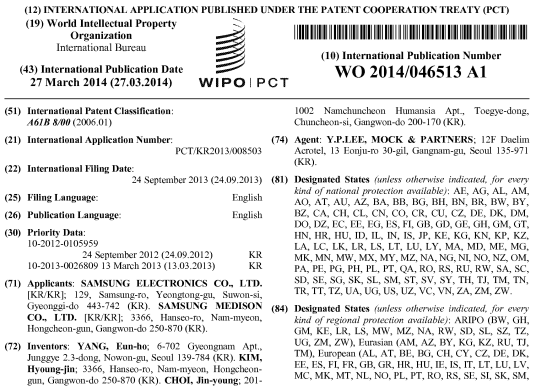
The PCT (Patent Cooperation Treaty) is an international patent application treaty joined by more than 150 countries worldwide. A single PCT international application allows multiple countries to seek patent protection simultaneously, reducing the hassle of filing separately for each country.
However, the PCT does not directly grant an "international patent right," After the international phase, individual examinations by each country's patent offices lead to patent registration at the domestic stage.It works.
The importance of international patent applications The principle of personal ownership in patentsIt comes from here. Even if a patent is obtained in one country, it is not effective in another, so to protect your invention in overseas markets, you must file separate applications in each country. By consolidating these overseas applications into a single window, the PCT saves time and effort for companies and applicants, and is widely utilized to the extent that about 60% of global overseas patent applications are processed through the PCT system. Korea joined the PCT in 1984, and currently, domestic companies such as Samsung Electronics and LG Electronics are also developing global patent strategies through PCT applications at the world's highest level.
PCT Application Procedure

The PCT international application procedure is International Phaseand Domestic PhaseIt is broadly divided into these and follows the following key steps.
- International Application
- Applicants submit a PCT international application to their national patent office or WIPO International Office and pay a designated fee. The application must be written in one language according to the formal requirements set by the treaty, and Korean applicants may choose to file in Korean, English, or Japanese.
- When you file a PCT international application, the international filing date is granted, and this date is later recognized as the same filing date in each designated country. (If you claim national priority, you must file a PCT application within 12 months from the initial filing date.)
- International Search
- Once an international application is received, an International Investigating Authority (ISA) is designated to conduct prior art searches. The ISA (one of the major patent offices) searches prior patent and scientific literature related to the invention and prepares an International Search Report (ISR) and Written Opinion, which are opinions on the potential patentability of the invention.
- The ISR is typically prepared about 16 months after filing and provided to the applicant, containing an initial assessment of the novelty and inventive step of the invention. After reviewing the ISR, the applicant may amend the claims (PCT Article 19) if necessary (within 2 months after serving the ISR).
- International Publication
- The details of the international application are disclosed 18 months after the priority date of the initial application (usually the domestic filing date). The application specification and ISR are published and made public in international bulletins issued by WIPO, making them accessible to anyone worldwide.
- Through international disclosure, the invention is made known to competitors or the general public, and applicants can express their intention to license their technology simultaneously through tools like PATENTSCOPE. Even after the disclosure, the international phase process continues.
- Supplementary International Search (optional)
- If necessary, the applicant may pay an additional fee and request a supplementary investigation from a second international search agency. This is an optional procedure for discovering prior literature in other languages or technical fields that the main ISA may not have explored.
- Supplementary investigations can enhance the reliability of international applications, but they are not commonly used in all applications.
- International Preliminary Examination (optional)
- Based on the results of the international search, applicants can request international preliminary examination with the International Preliminary Examination Authority (IPEA). Typically, after receiving the ISR and the statement of opinion, a preliminary examination must be requested with IPEA within 19 to 22 months (from the international filing date or priority date), and IPEA will conduct further examination of patentability based on the applicant's revised specification.
- As a result of the international preliminary review, an International Preliminary Review Report (IPRP, Chapter II) is issued, which is usually prepared around 28 months from the priority date. IPRP provides a more in-depth evaluation of whether the invention meets novelty, inventiveness, and industrial applicability, which can serve as a valuable reference in subsequent national examinations. (If you do not request a preliminary international examination, you will be based on the international investigation report.) IPRP Chapter IIt is written at this 30-month point.)
- National Phase Entry
- Once the international phase ends, applicants must enter the national phase with the patent office of the country where they wish to obtain the patent within 30 months from the priority date. At this time, you must submit a specification translated into the relevant language for each country, and pay the domestic application and fees.
- Most countries adopt the 30-month standard, but some (e.g., European Patent Office (EPO), Australia, etc.) allow up to 31 months, so be sure to check the target country's deadline. Applications that have entered the national phase undergo their own examination in each country, after which rights are established according to each country's laws.
- (Note) If you file for international preliminary examination 19 months in advance and proceed with Chapter II procedures, theoretically, you can secure an entry period of at least 30 months in all countries.
Key advantages of the PCT

PCT international applications offer several advantages for developing international patent strategies:
- Multi-country effect with a single application
- A single PCT application can benefit from filing simultaneously in multiple countries, reducing the burden of submitting applications individually for each country. In other words, by simplifying the requirements for filing date recognition, rights can be secured in multiple countries based on a single international filing date.
- Deferring and reducing initial cost burdens
- By utilizing the PCT procedure, applicants can defer translation costs and individual application fees for each country's application to the domestic stage. In the international phase, a single statement (e.g., English or Korean) is used, so you do not need to incur multilingual translation or local agent appointment costs for 30 months.
- Some countries also offer fee reductions for applications via PCT. This is a major advantage for startups or research institutions with limited budgets to reduce initial costs while seeking global patent acquisition.
- Patentability Determination and Opportunities for Supplementation
- Through the International Search Report (ISR) and International Preliminary Examination Report (IPRP), you can estimate the likelihood of obtaining a patent early. Based on the prior art search results of ISA and its patentability perspective, the value of the invention is evaluated, and corrections can be made if necessary.
- If you have also undergone international preliminary examination, you can gain a more in-depth evaluation of the novelty and inventive step of your invention, allowing you to identify and respond to issues that may be rejected in future applications from various countries.
- Flexible strategy decisions after filing
- Using the PCT, you can defer the selection of the overseas filing country, which normally requires a decision within 12 months after filing a domestic application, for up to 30 months. During that additional time, you can review marketability, competitive trends, and whether to attract investment to decide whether to enter the country, maximizing strategic flexibility.
- If an invention is deemed difficult to patent, you can abandon a PCT application to save costs, and if deemed promising, you can enter more countries, expanding your options.
- Standard Pathways for Building a Global IP Portfolio
- The PCT system is a global patent filing standard widely used by multinational corporations and startups and universities. The majority of overseas patent applications worldwide follow the PCT route, allowing major companies to secure rights in strategic markets and protect R&D achievements internationally.
- Not only domestic and international large corporations (Samsung Electronics, LG Electronics, etc.), but also various small and medium-sized enterprises (SMEs) and universities (e.g., MIT, Seoul National University, etc.) are actively utilizing the PCT.
Cost structure and filing strategies for PCT applications
1. Cost Structure
- International Phase Costs
- (a) International raw materials (International Office fee): approximately 1,330 Swiss francs
- (b) International Investigative Agency (ISA) fee (approximately 150~2,000 Swiss francs depending on the institution)
- (c) Handling fee from the receiving authority (RO) (usually several tens of thousands of won)
- Converted to won, this is approximately Around 2,000,000 KRWand in addition, Filing agent feecan be added.
- Domestic phase costs
- You must decide which countries to enter within 30 months from the priority date, and for each target country, translation fee, Local agent fees, Application fee and Review Request Fee and other additional occurrences.
- While costs rise as the number of countries increases, the PCT allows for staggering that point into 30 months, reducing the initial burden of concentration. Some countries also offer fee discounts for PCT applications.
2. Application Strategy
- Whether to use the PCT route
- If you are targeting only 1~2 countries (e.g., one in the United States), filing directly in those countries without a PCT may be cheaper and faster.
- If you are considering multiple countries or have not yet finalized the country for overseas application, it is advisable to actively consider the PCT. After passing through the PCT international phase, you can secure up to 30 months for market validation and investment promotion, Final decision on entry countryYou can.
- Regional Strategies
- For example: If you target multiple European countries, you can use the option of entering the European Patent Office (EPO) after filing a PCT application for unified examination.
- Choosing an International Investigating Agency (ISA) is also important. Korean applicants can choose from KIPO, EPO, USPTO, and others, and obtaining a high-quality research report will help you speed up subsequent examinations in various countries.
- Cost Saving Tips
- By reducing the number of claims, you can lower the filing fee and receive some fee discounts through electronic filing.
- International preliminary screening is optional and can be omitted if budget is limited, but reviewing and correcting prior art derived during the international stage in advance is advantageous in reducing the risk of rejection in each country's review.
PCT utilization strategies for companies
Thanks to its flexibility and versatility, the PCT is suitable for organizations of various sizes. Intellectual Property Strategy Toolsand is being utilized.
- Startups and Small and Medium Enterprises (SMEs)
- For startups with limited funds and manpower, the PCT offers a balance between patent acquisition and cost management.
- If you file a PCT within one year after filing in Korea, you can gain an additional 18 months to conduct product and market verification or attract investment.
- Through international search results, you can identify patent potential in advance and decide whether to enter each country based on business priorities.
- Large corporations
- For large enterprises with large R&D scales, the PCT is an essential tool for efficiently managing large portfolios.
- Companies like Samsung Electronics, Huawei, and Qualcomm file thousands of PCT applications annually, securing uniform priority in key markets.
- Based on PCT ISR/IPRP results, you can select and enter the filing country, and maintain consistency in the country-specific specification based on the same international application.
- Research institutes and universities
- Public research institutions and university TLOs (Technology Transfer Departments) also actively utilize PCT.
- Since research results must be protected by patents in the global market to facilitate licensing or startup, a broad scope is secured through the PCT for now.
- Patent applications disclosed after international publication become valuable assets in licensing negotiations, and review opinions obtained at international stages such as IPRP objectively demonstrate the patentability of a technology.
Frequently Asked Questions (FAQ)
Q1. If I file a PCT application, does it grant me a patent right under international communications?
A1. No, it is not. PCT is International Application ProcedureHowever, this does not immediately give rise to an international patent that takes effect. Once the PCT international phase is completed, you must ensure that each Domestic Phaseand pass the examination by the relevant country's patent office to obtain the patent right
. In other words, a PCT application has the effect of filing in multiple countries simultaneously, It is not a system that grants a "universal patent"We must remember this. (To date, there is no unified patent right protecting the entire world, and the PCT is the closest collaborative system to that.)
Q2. Should I choose between a Paris Treaty priority application or a PCT application?
A2. Both methods are means of expanding patents overseas, and the appropriate approach should be chosen depending on the situation. Paris Treaty routeThis method allows individual filing in another country within 12 months from the initial filing date; if only a few target countries are confirmed, the procedure is simpler and the initial costs may be lower. On the other hand, PCT RouteSince the PCT international application is filed within 12 months after filing, the country can be selected within up to 30 months, Time to spareis a major advantage. Therefore, Many or undecided countriesthen the PCT is advantageous, Few and clear countries of applicationthen Paris Route can be efficient. For example, if you want to file in multiple European countries, it is convenient to process it all at once through the PCT and later enter the EPO, but if you only aim for the U.S. from the start, you can file directly in the U.S. via the Paris route. eventually Market scope of inventions, filing strategies, budgets and if necessary, a combined strategy of applying both routes (some major countries apply directly, others applying for PCT) is also possible.
Q3. What should I do if the international search results in a judgment that it is difficult to obtain a patent?
A3. Negative views in the PCT International Investigation Report (ISR) or International Preliminary Examination Report (IPRP) do not necessarily mean you must give up. These reports Advisory natureThe final approval of the patent is determined by examiners in each country. Therefore, if it is determined that there is still patent potential in important countries, the domestic stage will be entered Supplementing and Rebutting ClaimsYou can attempt to acquire rights through this method. However, even up to the end of the international stage, Uncertain outlook for patentabilitythen the applicant must file a PCT application Giving upThis leads to the large translation fees, government fees, and agent costs that may arise later in each country. SavingsYou can do it
. In this way, the PCT system allows applicants to Objective Review Opportunitiesand Boldly halting high-risk applicationsThis allows for efficient use of resources.
Q4. How much does the PCT international application cost, and are there additional costs at the national stage?
A4. The official fees for PCT international applications vary depending on the exchange rate at the time of application, Approximately 2 million won(About 1,330 CHF + ISA fee, etc.)
. This fee is paid to WIPO International raw materials, an international investigative agency forage, the domestic patent office service fee and others
. On the other hand, Domestic Phase Entry CostsThe number of countries and regions it enters varies greatly. There are translation preparation costs for each country, application and examination fees for each country, and local agent fees. For example, if you enter the US, Europe, or China, the cost can be several million KRW per case, totaling tens of millions of KRW. When you do the PCT, you don't have to pay all these costs all at once, Distributed by country at 30 monthsSince you end up spending money, it helps reduce the initial burden
. Additionally, when entering the country through a PCT application, some fee reductions can be applied, and since the same specification is used, translation repetition is reduced. Indirect cost savings There are also advantages.
Q5. Do I have to file a domestic application before filing for PCT?
A5. Must first file a domestic applicationIt is not something you should do. Under the PCT treaty, applicants may file their first international application directly
. However, in most cases, the applicant files a pre-filing in their home country, Claim prioritywhile proceeding with the PCT. If you file a domestic application, you have time to revise and supplement the draft specification, you are guaranteed a one-year grace period from the filing date, and you can receive examination results for your domestic application earlier. Also, according to some national regulations, Restrictions on Disclosure of Domestic InventionsTherefore, there are cases where you cannot file an overseas application immediately without your own country's approval (Korea has certain restrictions on overseas military technology applications). in conclusion Domestic Application → PCT ApplicationThis is common, but depending on your application strategy, it is also possible to go directly to the PCT without a domestic filing date. At this time, Application Date = Priority DateIt is considered as such, and the following 30 months are counted.
Q6. What language should I use to file a PCT application?
A6. PCT applications must be submitted in a language recognized by each receiving office (RO). If you file through the Korean Intellectual Property Office (RO/KR), you can write in Korean or English, and Japanese is also accepted. For example, if an applicant files a PCT in Korean with a specification, and KIPO is an international search authority, the ISR is prepared in Korean and the international publication is also published in Korean. After that, when entering English-speaking countries such as the United States or Europe, you must submit an English translation. Conversely, if you file a PCT application in English from the start, you will immediately receive the report in English at the international stage, so there is no need for translation when entering English-speaking countries later. Applicants only need to select the language of their main target country and consider ease of application. For reference, when filing directly with the WIPO International Office (RO/IB), you must submit in a language recognized by WIPO, such as English, and you can conveniently select the language and prepare the application documents through the electronic filing system (ePCT).
In addition, Is it possible to amend the specification after applying for PCT?, Changes in applicants or addition of priority and other procedural questions. At the international stage Article 19 Amendments(Claim Amendment) and Article 34 Amendment(Adjustment of the international preliminary review stage) is allowed, but new matter additions are not allowed, so caution is required. Additionally, after filing a PCT application, you can submit certain forms Change of Applicant's Nameor Addition of priority claims and for details, refer to the PCT Applicant Guide and WIPO FAQ for details. Patent attorneys and corporate IP personnel must thoroughly understand deadlines and requirements throughout the PCT process, and if there are any ambiguities, it is advisable to check the latest information through WIPO or the Patent Office's contact points.
Pine IP FirmPatent attorneys with extensive experience and accumulated know-how come together to support successful rights acquisition and IP strategies for companies, research institutions, and universities throughout the entire domestic and international patent application process. Do you want to securely protect your invention in the global market with a PCT application? Pine IP Firm right nowContact us and work with a professional IP partner Faster and more accurate PCT strategiesTry establishing it.