
Why Patents Matter in Visa Evaluation
If you are a foreigner preparing for a tech startup in Korea, you should not consider your visa strategy and intellectual property strategy separately. Especially D-8-4 Tech Startup Visaand D-10-2 Startup Preparation Visaare being considered, patents, utility models, and designs are more than just means of business protection; they are key documents directly linked to visa application requirements and evaluation materialsthat can be.
Pine IP law Firm first advises prospective entrepreneurs preparing for visa issuance as follows:
“If you have an idea, don't just prepare a business plan; you should first assess the possibility of securing intellectual property rights.”
D-8-4 Tech Startup Visa: Intellectual property rights are directly reflected in the score
The D-8-4 Tech Startup Visa is a residency status for foreign entrepreneurs who wish to start a business in Korea based on excellent technological capabilities. According to the OASIS guidelines, the D-8-4 visa primarily considers OASIS scores, essential items, corporate establishment, and business registration as key requirements.
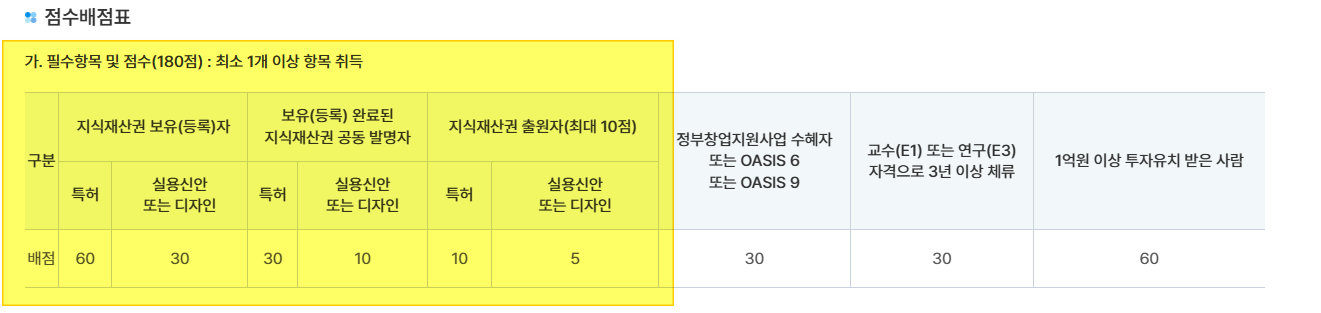
In this regard, intellectual property rights are part of the OASIS scoring system's essential itemsThe OASIS scoring table typically includes 60 points for patent ownership/registration, 30 points for utility model or design ownership/registration, 10 points for patent application, and 5 points for utility model/design application among others.
In other words, for those preparing for the D-8-4 visa, a patent is not merely a “nice-to-have document”; it can, in some cases, be a decisive factor in the visa scoring structure. Especially since registered patents carry significant points, if you are aiming for a tech startup visa, it is crucial to consider patentability, conduct prior art searches, and develop an application strategy from the early stages.
D-10-2 Startup Preparation Visa: Pending intellectual property rights also serve as important evidence
The D-10-2 Startup Preparation Visa is for prospective entrepreneurs preparing for tech startups in Korea. The OASIS guidelines specify as a D-10-2 requirement holding or having applied for patents, utility models, or design rights.This is specified.
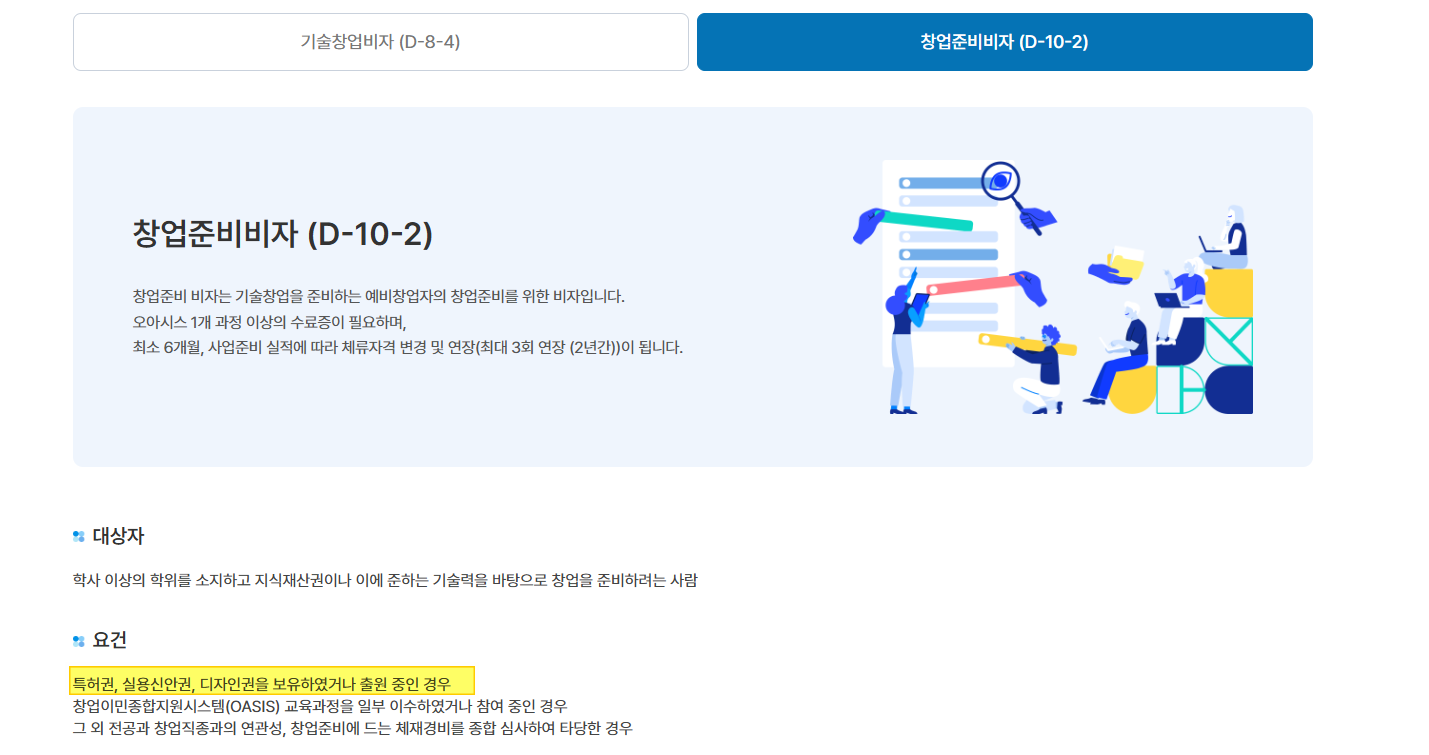
Therefore, for the D-10-2 visa, intellectual property rights are not merely bonus points but rather serve to demonstrate that one is preparing for a tech startup, functioning as application requirements and evaluation materials.They can function as such. Even if registration is not yet complete, well-prepared patent, utility model, and design applications can help explain the technicality, specificity, and readiness of the startup item.
Points to note
During the visa preparation process, many people ask, "I've applied for a trademark; will that help?" While trademarks are indeed very important business rights, the intellectual property rights primarily mentioned in the OASIS guidelines for D-8-4 and D-10-2 are patents, utility models, and designs.These.
Therefore, if you are aiming for a tech startup visa or a startup preparation visa, you should not stop at merely protecting your company or brand name with a trademark. Instead, you should also consider whether the technical ideas of your product or service can be protected by a patent or utility model, and whether the product's appearance, UI, or shape can be protected by a design.
When should visa applicants consider patents?
The best time is before or concurrently with business plan preparation.In visa evaluations, "what you will start up" is important, while in patent specifications, "what technical distinctiveness exists" is crucial. If the direction of these two documents does not align, the persuasiveness of your business item may weaken.
Pine IP law Firm recommends the following sequence for foreign entrepreneurs preparing for visa issuance:
- Summarizing the technical core of the startup item
- Reviewing patent, utility model, and design possibilities
- Prior art search
- Establishing an application strategy tailored to visa objectives
- Reviewing the consistency between application documents and the business plan
Conclusion
For the D-8-4 Technology Startup Visa, intellectual property rights can directly contribute to your OASIS score. Furthermore, for the D-10-2 Startup Preparation Visa, the ownership or application of patents, utility models, and designs can serve as crucial evaluation material.
If you are preparing for a tech startup in Korea, it is safer to establish an intellectual property strategy from the early stages rather than hastily preparing patents right before applying for your visa.
Transforming ideas into rights and leveraging those rights as compelling evidence in the visa evaluation process. This is the primary strategy needed for prospective entrepreneurs preparing for a technology startup visa.
※ Please note that visa requirements and OASIS scoring criteria are subject to change. Therefore, before submitting your actual application, be sure to check the latest announcements and the standards set by the competent immigration office.