
What is a patent specification?
What is a patent specification?
A "patent specification" is an official document required to legally define the technical concept, core structure, implementation method, and scope of rights of an invention.
- Purpose of the patent specification: Objectively and specifically describe the invention so that the patent office examiner and third parties can clearly understand the relevant technical content.
- Legal effect: After a patent is registered, the scope of the patent is finalized by the claims in the specification. In other words, the statement immediately determines the 'scope of rights.'
The Importance of Patent Specifications
Key to determining the scope of rights
A patent specification is the only legal means to protect an invention. Even if a patent is registered, if the specification is poorly prepared and does not properly reflect the core of the invention, the actual scope of protection can become very limited.
Evidence in case of disputes
When a patent infringement lawsuit is underway, the tribunal or court hears the case based on the contents stated in the patent specification. When determining whether another business or individual "used a technically identical or equivalent invention," the final criterion is the 'invention stated in the specification.'
Investment Attraction and Commercialization Perspective
When a tech startup or research and development company receives investment, the patent specification serves as an important material for evaluating technology assets. Investors make investment decisions by looking at how stably their patents are protected (i.e., the completeness of the specification).
Components of the patent specification
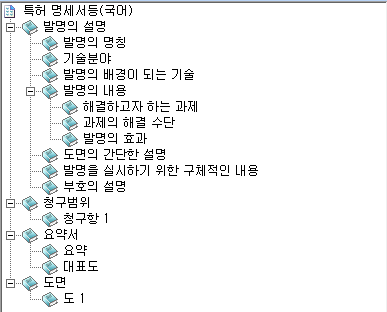
Title of the invention
- This is a brief summary of the technical field and key points of the invention.
- It must be defined precisely and clearly, so it is not too comprehensive or, conversely, not limited to a specific vocabulary.
Detailed Description of the Invention
- Technical Background: Describes prior technologies, issues that have not been resolved before, current market trends, and more.
- Purpose of the invention: This describes what problem the present invention aims to solve and what effects are expected from it.
- Specific Implementation Example (Embodiment): Specifically explain how the invention can be implemented. Detailed step-by-step descriptions of materials, device configuration, software logic, and more.
Claims
- Key points of the patent specification: This is the most important item determining the scope of patent protection.
- Independent Claims / Dependent Claims: Independent claims describe the most essential components of the invention, while dependent claims describe additional elements based on the independent claims.
Drawing Description
- It presents machine, process, and software flows that are difficult to express in writing alone.
- Each drawing is marked with reference marks and matched with the explanatory section to enhance understanding of the specification.
Abstract
- This section briefly summarizes the core outline of the invention, helping you quickly grasp the key points when searching the patent database.
- While it does not significantly affect the determination of actual rights scope, it is important in terms of readability and promotion.
Preparation Steps Before Drafting a Patent Specification
Prior art search
- KIPRIS, Google Patents, WIPO (World Intellectual Property Organization) and other online patent databases to find similar prior art.
- Thorough prior art research reduces future notices of reasons for rejection and lays the foundation for stable patent acquisition.
Deriving technical solutions
- Compared to prior art, the present invention must be clearly defined as "what new features or improvements it provides."
- Organize in advance the logic that connects problem awareness→, problem-solving ideas→ technical implementation methods.
Identifying Key Points of the Invention
- You need to specifically determine what the "core construction" in the invention should be protected.
- It is advisable to prepare claims that focus on protecting key points and supplement additional elements with dependent claims.
Patent Specification Preparation Process
Describing existing technologies and issues
- Explain persuasively in the technical context "what limitations existing technologies have."
- Only when the problems of the existing technology are clearly revealed can the necessity and value of the invention be demonstrated.
Description of the Invention's Purpose and Effects
- It emphasizes that the invention was devised to solve problems, specifically mentioning the effects achieved as a result—such as speed improvement, quality enhancement, and cost reduction.
- If the effect can be quantified, use numbers or charts to make it more persuasive.
Creating Specific Examples
- At least one embodiment (embodiment) should be listed, but if possible, it is recommended to comprehensively describe several variant examples.
- For each embodiment, specify the required materials, software modules, equipment configuration, and so on in detail.
- Diversity of embodiments: You need to present as many examples of variants as possible to broadly secure patent rights.
Notes on Filling Out Claims
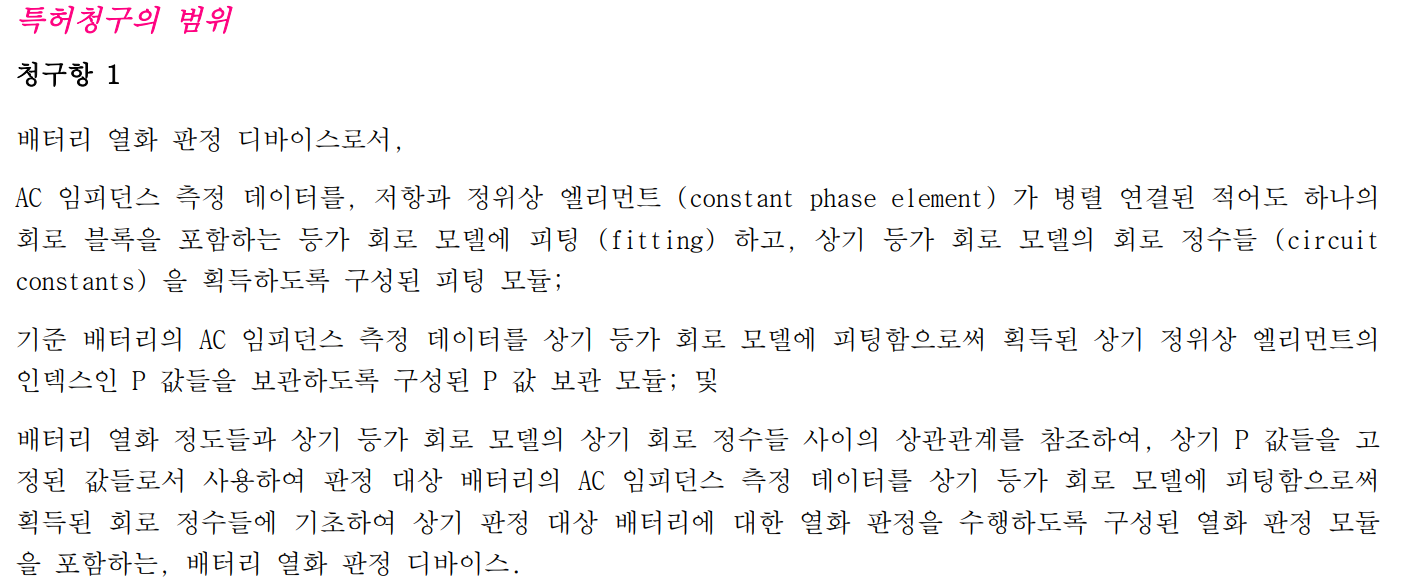
- The independent claims are concise and essential.
- If there are unnecessarily lengthy explanations or too many limiting elements, the scope of rights may unnecessarily narrow.
- Consider the possibility of expansion as a dependent claim
- Set up independent claims comprehensively, but supplement specific technical elements with dependent claims to prepare for future disputes.
- Expressions like "by ~" or "including ~"
- When writing claim sentences, you should appropriately use phrases and logical structures recognized under patent law. It is also very important grammatically.
How to Write Drawings
- Visual Understanding Through Drawings: Diagrams of technology flow and device configuration supplement areas that are difficult to express in writing.
- Reference Symbols and Brief Explanations: For example, "The 10 in Figure 1 represents ~" must match the drawing with the detailed description.
Writing an Summary
- Briefly summarize the name, purpose, main components, and effects of the invention before submitting.
- It's simple, but since it can leave a first impression on examiners and search users, make sure you don't miss the key points.
Common Mistakes and Solutions When Drafting Patent Specifications
Use of ambiguous terminology
- Solution: If technical terminology is needed, provide a definitional section at the beginning of the document or explain it using footnotes.
- Maintaining consistent terminology makes it easier for examiners to understand the invention.
Expansion and reduction of unnecessary claims
- Over-expanding claimsIf you do so, you are likely to be rejected during the review process.
- overreductionThis effectively reduces the range of protection you can receive.
- Solution: Clearly identify the core of the invention and consult with the patent attorney to establish the "appropriate scope."
Example Imbalance
- If you focus excessively on one embodiment and write it in detail, while omitting or roughly describing the others, it will be difficult to fully recognize the full scope of the invention.
- Solution: Balance between embodiments and present each example in an organized format.
Content errors and typos
- The patent specification contains such an extensive amount of technical data that even patent attorneys need to review it multiple times.
- If there are typos or typos, it is likely to become grounds for rejection, and you waste time during the correction process.
Checklist after completing the patent specification
- Title of the inventionand the content of the main text?
- Background and Purpose of the InventionIs this described in detail?
- claimDoes it accurately reflect the scope of protection for this invention?
- Drawingsand detailed descriptions are consistently provided.
- Terminology Definitions, Spelling errorIs there none?
- Various embodimentsDid it explain it in a balanced way?
- Prior ArtDoes it highlight the novelty and progressiveness of inventions compared to the others?
Tips for Writing an Effective Patent Specification
Get help from a patent attorney
- A patent specification should address both legal and technical aspects. If you lack experience in preparing statements, seeking help from a patent attorney is effective.
- Even if you write everything yourself, we recommend seeking advice from a patent attorney at the final review stage.
Utilizing AI-based patent analysis tools
- Translation and sentence correction: When reviewing overseas patent information, properly utilizing AI translation services can save you time and costs.
Overseas Patent Registration Strategy
- Rather than filing patents only domestically, PCT (Patent Cooperation Treaty) Applicationor to major overseas countries (such as the United States, China, the European Union, etc.).
- If considering overseas applications, you should understand the differences in patent laws in each country in advance to meet the requirements for specification entries.
Patent Specification and Post-Application Procedures
How to Submit Application Documents
- Online application: You can submit documents through the Patent Office's E-Filing system.
- Offline Application: You can print the required documents and submit them directly or by mail to the Patent Office, but online applications are recommended (for speed and efficiency).
Examination Stage (Formal Examination, Substantive Examination)
- Method Review: Confirm whether the submitted documents are formally complete, and check the status of fee payments.
- Substantive examination: We conduct a thorough assessment of the novelty, inventiveness, and industrial applicability of the invention.
Notification and Amendment of Reasons for Rejection
- If grounds for refusal are found during the substantive review, you will receive a notice.
- Depending on the reason for refusal correction(Amendments to claims, supplementation of embodiments, addition of technical explanations, etc.) can be carried out.
- If issues are resolved with proper calibration, the likelihood of registration increases.
Procedures after registration decision
- Patent Fee Payment: If the examination is passed, a registration decision is made, and the patent rights are granted only after the patent fee is paid.
- Maintenance Annual Leave: Afterwards, you must pay annual leave fees for annual (or periodic) maintenance for the patent to remain valid.
FAQ (Frequently Asked Questions)
- Q: Do I have to hire a patent attorney when preparing a patent specification?
A: There is no legal obligation to hire a patent attorney, but if you lack experience preparing statements, seeking help from a patent attorney is effective. - Q: Does writing multiple examples help with the review?
A: Yes. By providing various embodiments, you can demonstrate that the scope of application of the invention is broad and specific. However, each embodiment must be described in sufficient logical and technical detail. - Q: How many claims should I allow?
A: You just need to set it appropriately to best represent the scope of the invention. In practice, they range from fewer than 10 to 20~30. Too much can reduce concentration, and too little may result in insufficient protection. - Q: Is it possible to file a patent without drawings?
A: Some software, chemical-related inventions, and other drawings may not be essential. However, if possible, it is recommended to use drawings or flowcharts to explain the invention more clearly. - Q: When applying overseas, is there any problem if I translate the domestic specification as is?
A: Patent laws and requirements vary by country, so direct translation alone may not be enough. Additional supplementary work is needed to align patent terminology with legal formats in each country.
Conclusion

The patent specification is the most important legal tool for protecting inventions and a key document that proves the value of R&D deliverables. A clear and logically written specification enhances the stability of patent rights and serves as a powerful tool for future investment or licensing negotiations.
- Key Summary:
- Sufficient prior art research: Clearly identify the differences from similar inventions
- logical structure: Problem → Purpose of the Invention → Specific Embodiments → Effects → Claims
- Claim balance: Set core protection areas reasonably without excessive expansion or contraction
- Drawings and detailed descriptions are consistent: Reference marks, structural explanation, and consistency of effects
- Minimizing typos and ambiguity: Use accurate terminology and expressions through patent attorney review
To obtain patents recognized for technological excellence, above all, Completeness of Specification Preparationis important. Even if it takes time, objectively analyze the technology you invented and thoroughly document it. If necessary, it is also advisable to seek professional assistance from a patent attorney for supplementary work.
The patent specification soon determines the scope of the invention's rightsAlways remember this.
By combining systematic drafting with advice from a patent attorney, you can secure more stable patent rights and achieve successful commercialization.
If you feel overwhelmed by the patent specification preparation and application process, Pine IP Firmis here to help.
Patent Attorney Consultation Appointment: To protect your invention idea, a thorough specification is essential.
Establishing a Customized Patent Strategy: Specialized patent attorneys in each technical field present optimized patent strategies for individuals, startups, and companies alike.