
Medical Device Patent Dispute Response Strategies
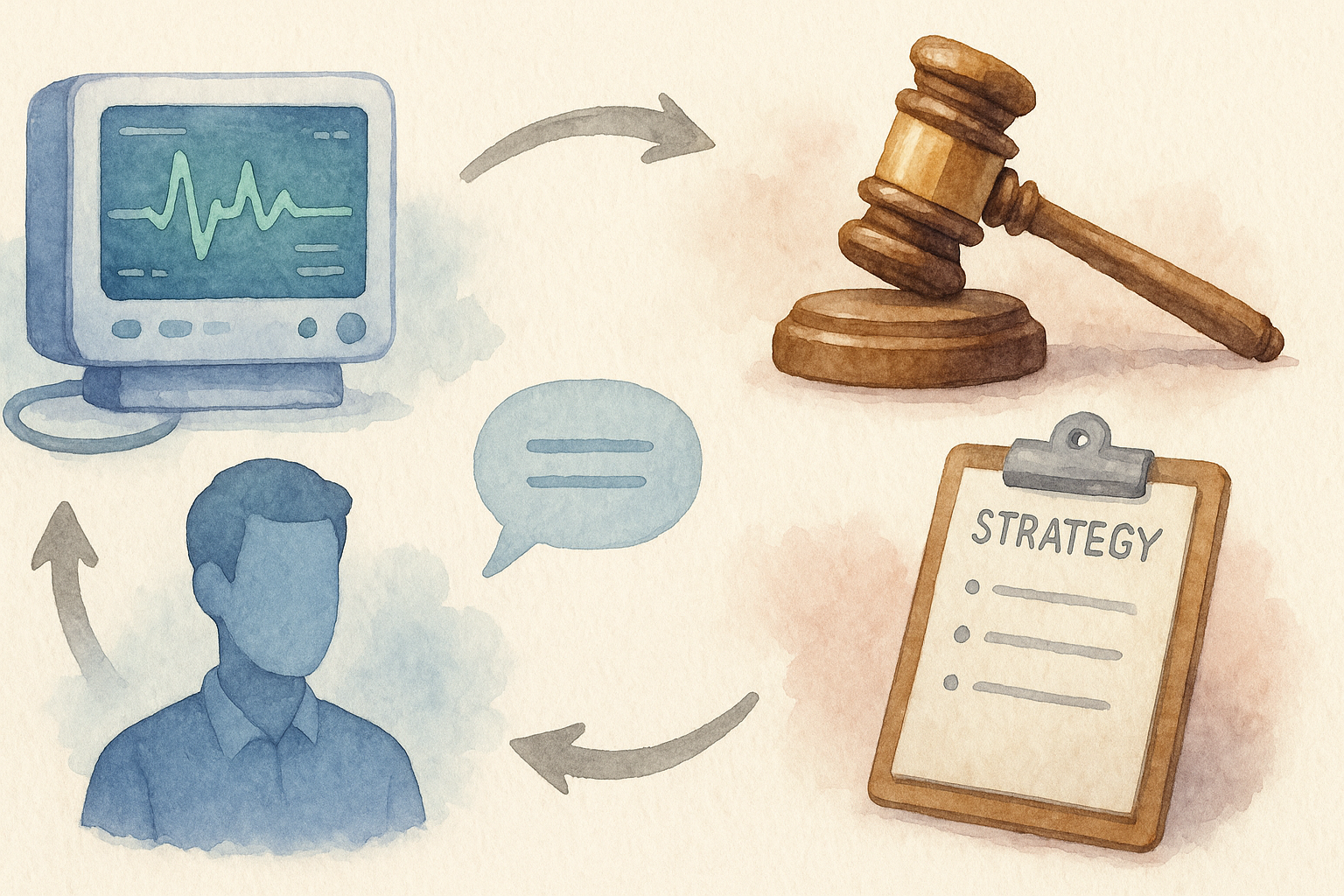
The healthcare industry is converging with digital technologies such as big data and artificial intelligence (AI), shifting the paradigm from traditional post-treatment methods to a focus on prevention and health management that can be predicted based on medical data. In particular, in line with technological advancements such as the Fourth Industrial Revolution, AI-based medical device technologies utilizing ICT convergence and medical big data are being actively developed, driving innovations such as improved diagnostic accuracy and increased medical service efficiency and driving rapid market growth. However, these technological advancements inevitably carry a dual nature: intensified patent competition and increased potential for disputes.
Patent applications in the AI medical device sector have steadily increased since 2013, especially in 2018, when the widespread adoption of artificial intelligence technology and technological development by startups within the medical and healthcare industries coincided with a sharp rise in the numbers. By country, China holds the highest proportion of applications, followed by the United States and South Korea. By technology field, the largest proportion of applications are in diagnostic and examination fields such as imaging diagnostics and biometry, while active patent activity is also active in the surgical and therapeutic fields. Major applicants are led by global corporations such as Philips N.V. and Siemens AG, while in Korea, most applications are filed through university industry-academia cooperation foundations.
However, due to the nature of the medical device sector, which invests significant time and cost in product development and licensing procedures, there is often a relatively insufficient level of vigilance regarding patent disputes and the establishment of systematic response strategies. In fact, while the overall number of medical device patent disputes is decreasing, patent disputes in advanced technologies such as artificial intelligence application, software processing, and medical image processing are actually on the rise, requiring special caution from companies related to AI medical devices.
1. Conflict Prevention
Preventing disputes is the best way to respond. At each stage of product development, companies should establish and implement the following proactive IP strategies.
- Idea generation stage (patent trend research):
It is important to proactively determine whether the idea you want to develop is already a publicly available technology, similar to a product implemented by others, and whether there are related intellectual property rights. Patent trend research involves quantitatively analyzing patents in specific technology fields (by year/country, key applicant activity status, market growth stages, etc.) and conducting qualitative analysis to deeply examine the technicality and scope of rights of selected key patents. This allows you to set product development directions, establish market entry strategies, and review competitors' technologies. - Product Confirmation Stage (Patent Infringement Analysis, FTO):
Since medical devices are used in the human body, they must go through strict regulatory procedures with the US FDA and domestic Ministry of Food and Drug Safety, during which detailed product specifications are finalized. If product specifications are determined at this stage without patent infringement review, patent issues may make product sales difficult even after costly and time-consuming approvals. Therefore, based on established product specifications, you should conduct a Freedom-To-Operate (FTO) analysis to review the possibility that your product may infringe on others' patents. Use a claim chart to compare each component of the patent claim with your product, and closely examine not only literal infringement but also the possibility of infringement through equitable arguments. If the terms in the claim are unclear, it is necessary to interpret the scope of rights by referring to detailed descriptions, drawings, and examination history in the specification. - Product promotion and sales stage (notes for exhibition participation and contract):
Promoting products at overseas exhibitions constitutes a solicitation for sale and may be considered patent infringement, and the patent holder may file an injunction to prohibit early infringement, resulting in seizure of the exhibited products. To prevent this, you should identify the risk of disputes in advance, obtain a non-infringement opinion from a local representative, and be prepared to seek legal advice immediately upon receiving a warning letter. Additionally, when entering into supply contracts for goods, you should carefully review the Patent Warranty or Indemnity clauses. From the supplier's perspective, it is important to reasonably limit the warranty coverage, while from the buyer's perspective, it is important to coordinate the contract terms to ensure sufficient protection. - Building a strong patent portfolio:
Beyond simply protecting individual technologies, from the early R&D stage, it is essential to comprehensively consider marketability, technicality, patent trends, and infringement analysis to build a strategic patent portfolio that encompasses core technologies, applied technologies, and additional technologies. This plays a decisive role in forming technological and market entry barriers and securing a competitive edge. It is important to systematically manage research and development history, link it to patent applications, and secure a broad scope of rights by including various embodiments when drafting invention descriptions. Additionally, it is important to utilize the U.S. provisional application system to quickly secure filing dates, strengthen the patent network through divisional applications, continuation applications, and continuation-in-part applications tailored to domestic and international conditions, and use priority examination systems if necessary to quickly secure rights. It is also important to regularly analyze, visualize, and manage your own patent portfolio.
2. Dispute Response
If a patent dispute arises despite proactive prevention efforts, it is essential to respond quickly and wisely.
- Warning Letter Receipt and Response:
A warning letter may signal the start of a patent dispute, and ignoring it may result in a legally disadvantageous situation (e.g., the starting date for calculating damages, or the requirement for intent to infringe is established). Upon receiving the warning letter, consult a legal expert to understand the sender's intent (such as competitors' market checks, NPE license requests, etc.) and carefully review the patent rights specified in the warning letter (patent holder, validity period, whether annual fees have been paid, family patents, IDS submission, etc.—which can be verified at USPTO Patent Center, etc.).
When analyzing the potential infringement of your product, AI medical device patents often have patent eligibility issues (Section 101 of the U.S. Patent Code), just like general software technology, so this aspect should be closely examined. Additionally, it is necessary to clearly distinguish and analyze whether the claimed invention involves the actions of a medical technician or purely the operation of a device, whether the executing entity of each component is a single device or multiple devices, and whether the AI model is a technology in the training phase or in the inference stage.
If the likelihood of infringement is high, the possibility of invalidation of the patent should be reviewed. In addition to common invalidity reasons (such as validity of invention, industrial applicability, incomplete documentation, novelty, inventive step, etc.), AI medical device patents are prior art, and academic papers can play an important role, so searching paper databases such as Google Schola is also essential. Based on the analysis of infringement and invalidity, establish a multifaceted response strategy including constructing non-infringement logic, filing invalidity trials, designing circumventions, and negotiating licenses or cross-licenses, and respond within the specified deadline. At the same time, litigation hold measures must be implemented immediately to prevent future litigation, prohibiting the modification, damage, or destruction of related materials. - Patent Infringement Litigation Response:
Patent infringement lawsuits are complex and lengthy, so selecting a professional litigation representative is extremely important. In particular, the field of AI medical devices is technically complex and closely linked to regulatory matters such as permits and approvals, making it essential to select an agent with a strong understanding of the field.
U.S. patent infringement litigation proceeds under the Patent Local Rules (PLR), and the choice of jurisdiction and venue may affect the outcome of the case. (See the increase in lawsuits in Delaware District Court after the TC Heartland decision.) Whether to apply for a jury trial and utilize expert testimony are also important strategic considerations.
The litigation process begins with the plaintiff's filing of a complaint, and the defendant may acknowledge or deny the plaintiff's claims through an Answer, or file an affirmative defense (e.g., patent invalidation, non-infringement, preemptive rights, etc.) or a counterclaim. Afterwards, the process proceeds in the order of discovery proceedings, Markman hearing to interpret the claims, summary judgment, or trial. If you are dissatisfied with the first-instance judgment, you may appeal to the Federal Circuit Court of Appeals (CAFC). - Utilizing patent invalidation trials (IPR, PGR, etc.):
One of the most powerful ways to respond to patent infringement claims is to invalidate the patent. In the United States, systems such as Inter Partes Review (IPR) and Post-Grant Review (PGR) can be utilized. IPR can be challenged for invalidity after 9 months from the patent registration date or after PGR termination based on prior literature (patents, publications) due to novelty or lack of inventive step, and it has the advantage of being relatively quick (final decision made within one year after commencement of examination) and can be proceeded at a low cost. You can also consider filing an IPR during infringement litigation and applying to the court for a motion to stay pending IPR, thereby halting the proceedings and waiting for the IPR outcome. PGR can be applied for within 9 months from the patent registration date, and can claim a broader range of invalidity grounds, including novelty and inventive step, as well as patent eligibility (Article 101) and incompleteness (Article 112).
3. Active Utilization of Patent Assets
Beyond a defensive perspective, its robust patent portfolio can serve as a weapon of attack to gain an advantage in a competitive environment.
- Analysis of Competitors' Products and In-House Patents:
If a competitor's product is suspected of infringing on your patents, you should collect detailed information about the product (catalog, website, actual product analysis, etc.) and carefully review whether infringement occurs through claim chart analysis against your own patents. Especially for patents related to software or algorithms, obtaining source code may be necessary to prove infringement, which can be done through the discovery process. - Decision on whether to proceed with the exercise of rights:
You should carefully review the validity of your own patents, analyze the patent portfolio held by the other party to assess the possibility of counterattack, and carefully consider the benefits you may gain from exercising rights, the costs involved, the duration, and manpower involved. - How to exercise patent rights:
By sending warning letters, you can inform the other party of infringement and encourage license negotiations, or directly file a patent infringement lawsuit. When filing an infringement lawsuit, it is important to select a favorable court location by considering the likelihood of winning and the speed of case handling. In U.S. litigation, you should prepare effective claims for damages based on an understanding of how to calculate damages (such as losses from sales and profits suffered by the patent holder, reasonable royalties, etc.).
Conclusion
The AI medical device market is a field where technological advancements come alongside fierce patent competition. Only companies that establish systematic and strategic IP management systems from the early stages of technology development and respond quickly and effectively through professional legal support in the event of disputes can ensure sustained growth and success in the global market. It is more important than ever to establish rational response strategies based on a deep understanding of patent trends and the conflict landscape in the field of AI medical devices.