
Lesson from the MUJI China Trademark Dispute: Product Classes Matter More Than the Name Alone
Why did a problem arise even though the same brand name was registered?
Companies preparing to enter a foreign market usually focus first on the brand name. They review whether the name sounds natural locally, whether similar marks exist, and whether the mark can be registered. In trademark practice, however, another issue is just as important: which classes and which specific goods should be covered.
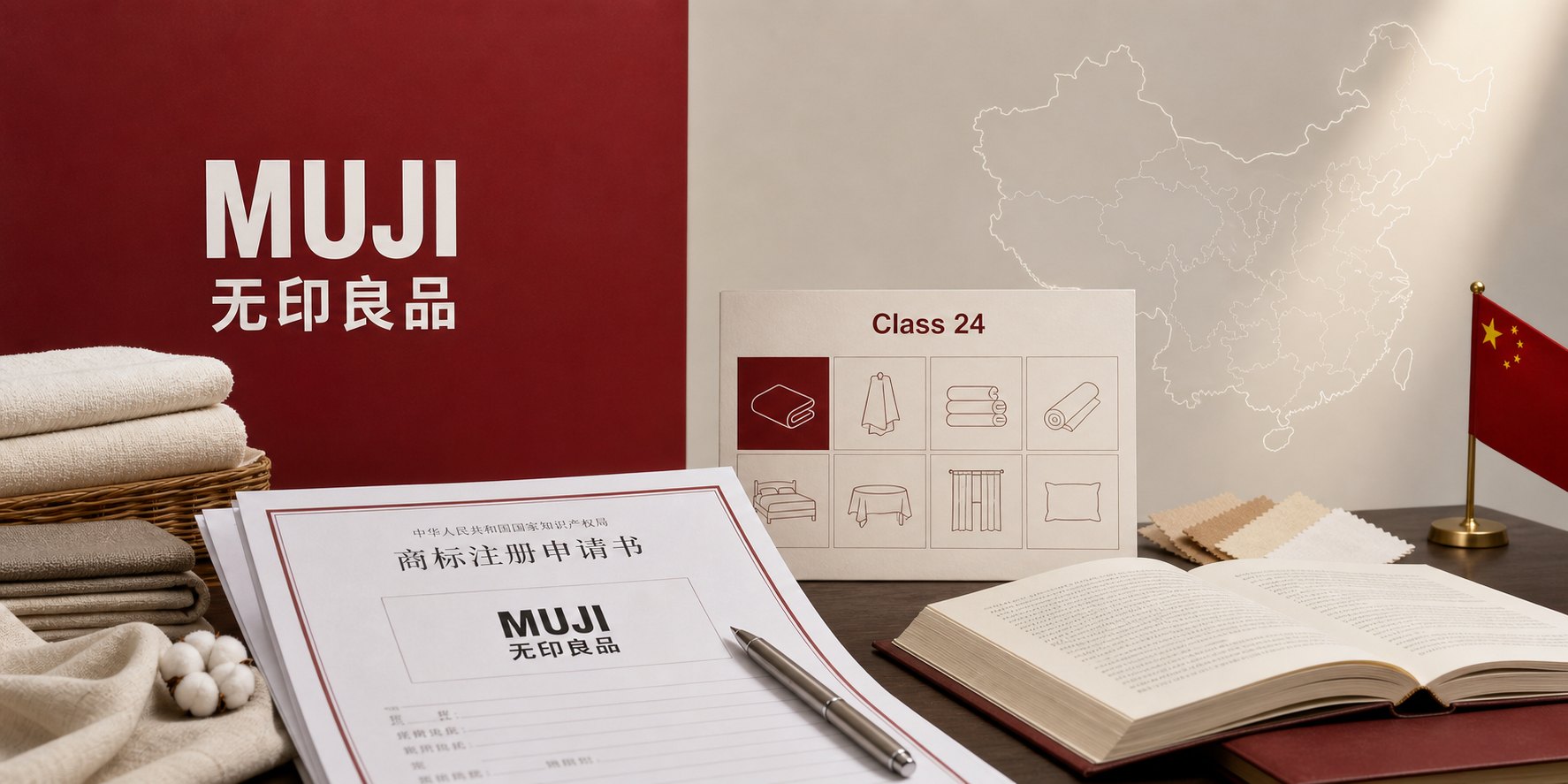
The MUJI dispute in China illustrates this point. MUJI had registered the Chinese brand name “无印良品” for several categories of goods. However, its protection was not sufficient in Class 24, which covers textile goods such as towels, bedding, and fabrics.
A Chinese company secured rights in that class and later asserted those rights against certain MUJI products. The result was not merely a theoretical conflict. MUJI faced damages and an apology order in relation to certain goods in China.
Trademark rights do not automatically cover all goods
A common misunderstanding is that registering a trademark gives exclusive rights in every business area. Trademark rights are generally limited to the classes and goods designated in the application. If an important product class is missing, a real gap can remain even when the same brand name is registered elsewhere.
Class 24 was important in the MUJI dispute because lifestyle brands naturally expand into bedding, fabrics, towels, and interior textile goods. For a lifestyle brand, those goods are not peripheral. They are part of the likely expansion path.
Lifestyle brands need a broader class strategy
Lifestyle brands often expand widely. A brand may start with stationery or household goods and later move into apparel, furniture, cosmetics, food, kitchenware, bedding, fragrance products, or interior goods.
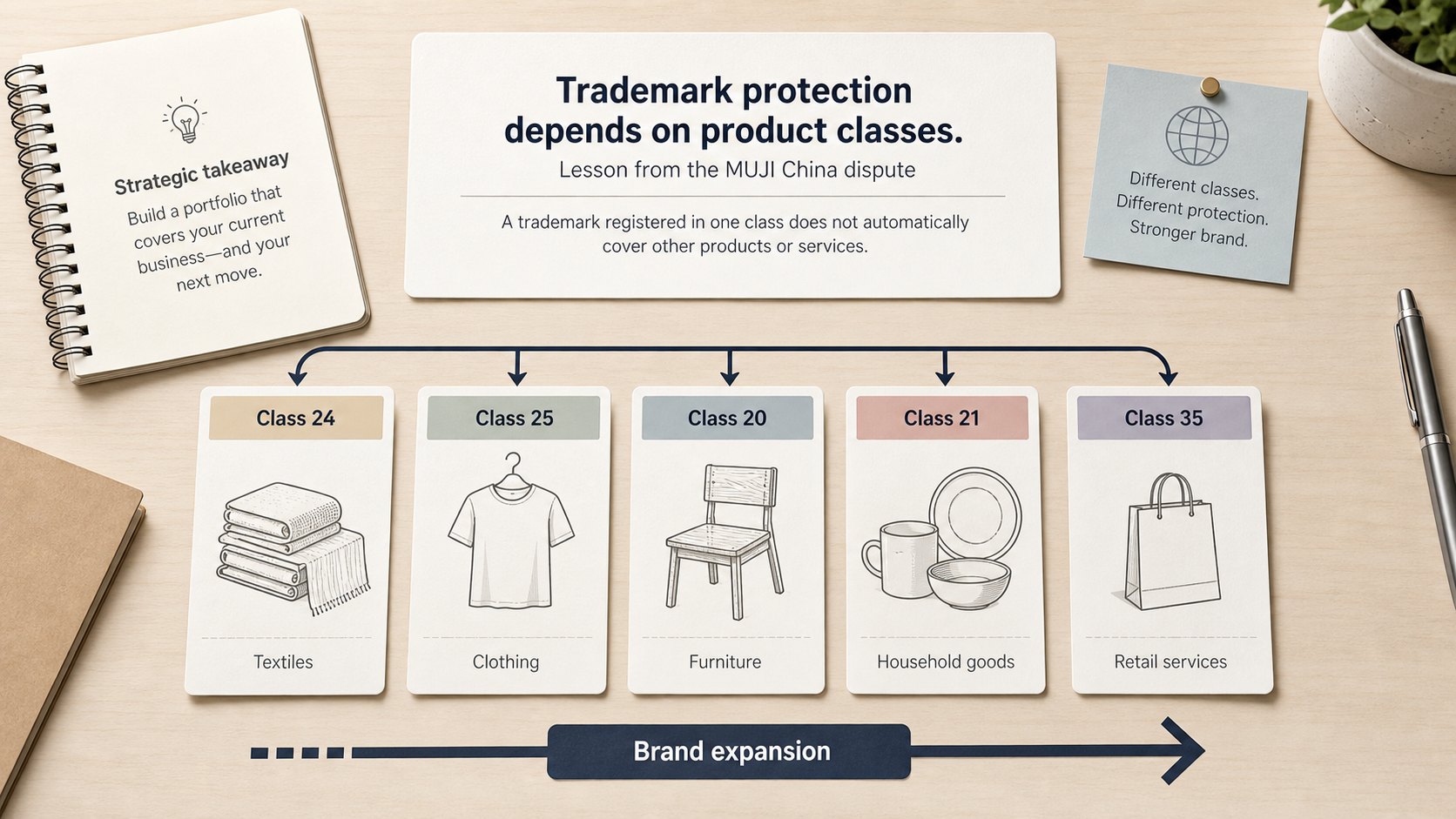
At the early filing stage, companies often limit the application to current products to save costs. That can be reasonable in some cases, but in foreign markets it may become difficult to recover a missed class later. In first-to-file jurisdictions, including China, a third party may register the mark first in a class that becomes important later.
Foreign filings should consider expansion, not only current sales
When filing foreign trademarks, companies should review not only goods currently sold, but also goods that may be sold within the next three to five years. This is especially important for brands that represent a taste, lifestyle, or design identity rather than a single product.
Local-language marks also require attention. In China, companies should review the English mark, Chinese character mark, phonetic equivalents, simplified and traditional variants, and names that local consumers may actually use. If a third party secures the local name first, brand operation can become difficult.
Pine IP Firm's view
A trademark filing is not merely a procedure for registering a name. It is a process for designing the business territory of a brand. Before entering a foreign market, companies should ask not only whether the mark has been filed, but also whether the likely product classes and local-language versions have been covered.
The lesson from MUJI is simple: file early, review classes broadly, and draft goods descriptions precisely. If a rights gap is discovered only after the brand has grown, the available options may already be limited.